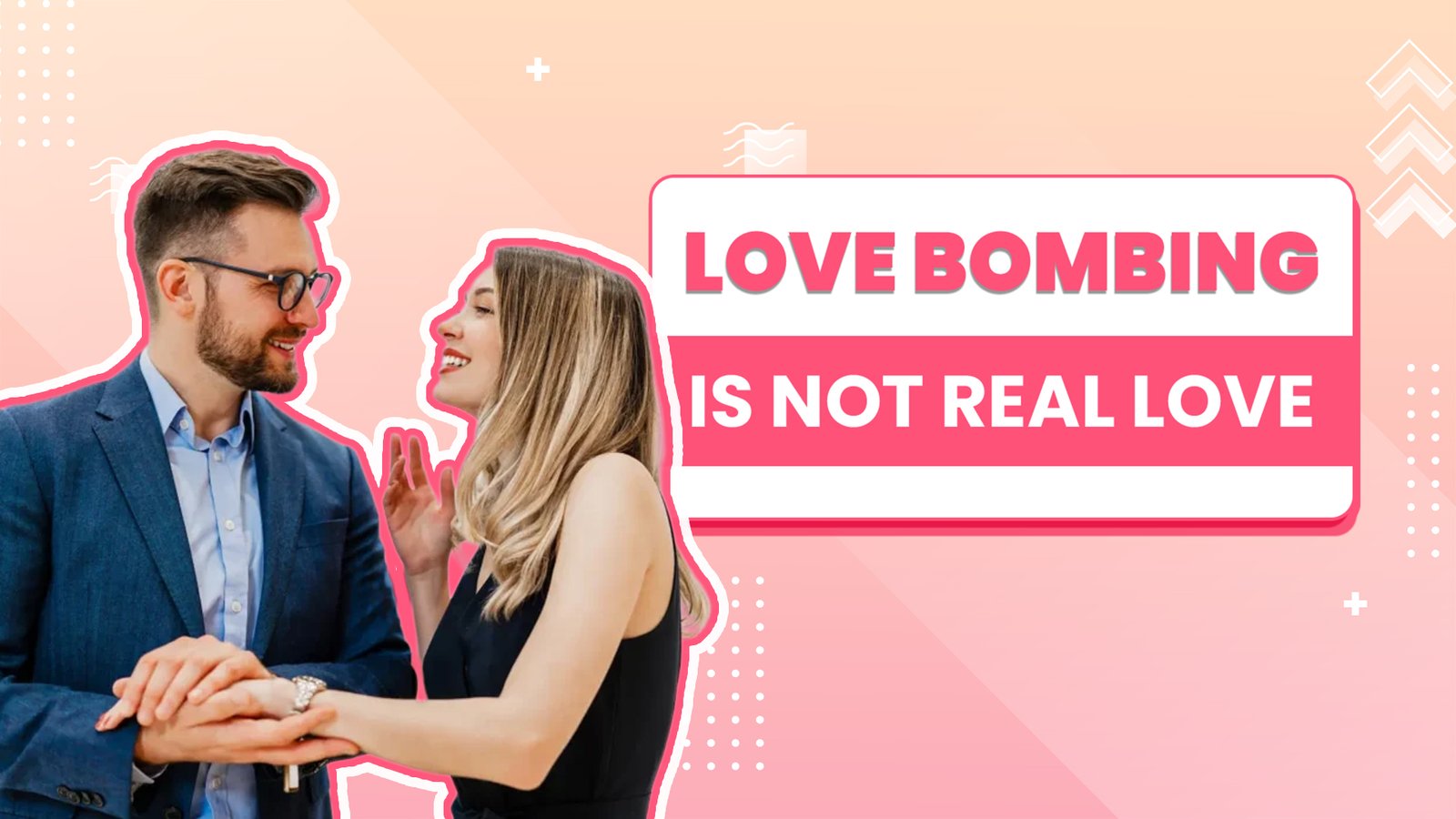
At the start of a relationship, it’s normal to feel butterflies, excitement, and an eagerness to spend time together. But sometimes, what seems like passionate love is actually love bombing an intense and overwhelming display of affection designed to manipulate rather than genuinely care.
While it may feel flattering at first, love bombing often leads to emotional control, dependency, and eventual disappointment.
Understanding why love bombing isn’t real love and recognizing the warning signs can protect you from falling into toxic relationship patterns.

Why Love Bombing Isn’t Real Love
Real love develops gradually. It’s built on trust, respect, and consistent effort over time. Love bombing, on the other hand, is about control and intensity, not genuine connection. The grand gestures, constant attention, and over-the-top affection are often a strategy to make you dependent on the other person emotionally.
Unlike real love, which respects your boundaries and allows space for individuality, love bombing overwhelms you to the point where you may ignore red flags. The intensity may fade just as quickly as it began, leaving confusion, heartbreak, and even self-doubt.
Signs of Love Bombing You Should Watch For
1. Overwhelming Affection Too Soon
If someone showers you with extreme affection, grand declarations of love, or talks about a future together within days of meeting, it could be love bombing. Healthy relationships grow naturally; they don’t skip steps.
2. Constant Attention and Contact
Love bombers often flood you with texts, calls, and messages throughout the day. While it may feel exciting at first, it can become suffocating and is often a way to monitor your availability.
3. Lavish Gifts and Gestures
Receiving thoughtful gifts is normal, but constant over-the-top presents especially early on can be a way to make you feel indebted. The aim is not generosity but emotional control.
4. Pushing for Quick Commitment
A major red flag is when someone pushes you into serious commitment very early, such as moving in together, meeting family, or discussing marriage almost immediately. Real love respects time; love bombing rushes it.

5. Ignoring Your Boundaries
Love bombers often disregard your comfort zones. Whether it’s pressuring you to spend all your time together or insisting you do things you’re not ready for, this lack of respect for boundaries is a sign of manipulation.
6. Sudden Withdrawal After Intensity
One of the clearest patterns of love bombing is the shift from extreme affection to sudden coldness. After overwhelming you with attention, the person may suddenly pull away, leaving you craving their approval and desperate to win back their affection.
Conclusion
Love bombing may look like a dream romance at first glance, but it’s not real love. Genuine love takes time, patience, and mutual respect, while love bombing is rooted in manipulation and control.
By learning to identify the signs such as overwhelming affection, boundary violations, and sudden withdrawal you can protect yourself and build healthier, more authentic connections.
True love isn’t about intensity in the beginning; it’s about consistency over time.
FAQs Section
1. Is love bombing always intentional?
Not always. Some people may act this way due to insecurity, but in many cases, it’s a manipulative tactic.
2. How can I tell the difference between real love and love bombing?
Real love grows steadily and respects boundaries, while love bombing is overly intense and rushed.
3. Can love bombing turn into a healthy relationship?
Rarely. Unless both partners address the behavior through honest communication and self-awareness, it often leads to toxicity.
4. What should I do if I suspect I’m being love bombed?
Take a step back, set boundaries, and slow down the pace of the relationship. If needed, seek support from friends or a counselor.
5. Why do people use love bombing?
Often as a way to gain control, feed their ego, or cover up insecurities by making their partner dependent.